I am a hearing student assigned the book Train Go Sorry in my Introduction to Humanities Class. Other readings assigned in this class include several essays from the book My California. In both books and film, we examined the cultures of California that form a microcosm of the U.S.; and the U.S. forms a microcosm of the world. In this essay, I will incorporate 4 required questions.
In American Sign Language, “train go sorry” literally means “missed the boat.” When author Leah Cohen uses this phrase, she is often referring to the many missed connections that take place between the hearing and Deaf populations. A deaf character in the book, named James Taylor, exemplifies this issue. He has been a student at the Lexington School for the Deaf since he was 14-years old, and his life has shown many examples of “missing the boat” During his first year at Lexington alone, James missed 148 days out of the school year. His attendance remained shaky, but improved dramatically over the years, especially when he moved into the dorms at the school.
For James, and many others in the Deaf community, there are constant instances of “train go sorry,” or when the boat has set sail without them. From this book, I learned a lot about how the Deaf community is forced to miss opportunities, because of a lack of understanding between the Deaf and hearing cultures.
When James goes to visit his brother Joseph, who is in prison, we see true examples of “train go sorry.” After waiting for several hours to see Joseph, James is told that his brother is actually in court and will not be able to see him that day. James and Joseph missed a connection. Later in the story, after several attempts, James actually gets to see his inmate brother. Joseph talks about how he misses home, how he wishes he could trade places with James, and about how home is so much better than the prison he is in. Joseph’s lack of good judgment has given him a prison sentence, and he is unable to live a life of freedom and accomplishment. James realizes that it is actually Joseph that has missed the train this time.
The author and main character of the book, Leah, has lived in the Deaf community and amongst deaf people her whole life, and wishes she could belong to the culture. Leah grew up in the halls of Lexington, where her parents worked. She was exposed to the culture, the people, the relationships, the education – everything except for the fact that she could hear. As the story progresses, Leah talks about the challenges she sees her deaf friends go though and exposes many issues of inequality between the hearing and deaf populations. I think she brings a very interesting perspective, since she is sort of in the middle of two cultures. Although she can hear, she eventually learns sign language and becomes an interpreter. She is very active in the Deaf rights movement, working to bring equality and shedding light on common misconceptions that the hearing community holds. I learned a ton from reading her thoughts on the Deaf community, and wish that all Americans could gain perspective on the beauty of the Deaf culture. I think that Leah sees this beauty and wishes that she could truly be a part of it. She wishes that everything about her could harmonize with this community, but she never will be 100% a part of it, since she can hear.
I will never forget the image in chapter 13, “Whose Apple Pie?” of the seminar panel hearings between the congressional committee and the Deaf community. It really made me sad to see how deceived the committee was into thinking that desegregation would be a service to the deaf and not harmful. At one point in the hearing, a panelist from the congressional committee said that it would be a horrible mistake to give deaf schools the responsibility of building the deaf culture. Why can’t we as the hearing population listen to the convictions the Deaf have regarding their own culture? They know what’s best for their own community! It almost made me cry reading the response of the deaf community to this congressman’s beliefs… “As more students are placed in mainstream programs, our culture will decline. We have pride in our culture and want to pass it on to future generations. Don’t you see this as a concern? […] The center of the deaf community has always been the schools. The importance of their role cannot be underestimated.”
The five facts about ASL or Deaf culture you think everyone should know are as follows:
1) Always make eye contact with a deaf person when speaking with them. I didn’t know this before, and it makes a whole lot of sense. It would be rude not to give full attention to the deaf speaker. Also, do not exaggerate words when speaking. It doesn’t make lip-reading easier for them, but it makes it even more difficult.
2) Being deaf is not a pathology or something to be “cured.” It is something to be celebrated. The Deaf community has a beautiful culture and take pride in the way God made them…who are we to try and change that?
3) Schools for the deaf are a central part of the Deaf culture. Without the schools, their culture would decline. We should fight for their rights to education that meets their needs and builds their community.
4) ASL is NOT an inferior language to English!
5) The Deaf community knows what is best for them. I really don’t think that the hearing population should interfere with the way they want to be educated or the ways they want to build their community. It is THEIR community, not ours.
Questions Videos Part 2:
1. Big River Montage – Deaf West Theater
This video showcases some of the theatrical talent of deaf performers. Singing and acting is still 100% possible for them even without the ability to hear.
2. Marlee Matlin Dancing with the Stars
She’s amazing! What a beautiful dancer and I loved what she had to say.
3. VSAI Day of the Arts at the Indiana Deaf School
This celebration at the Indiana Deaf School featured VSAI and ISD teaching artists. Dancing, crafts, arts, classes…what a wonderful day of expression and community!
4. Waiting For the World to Change
This was a truly inspiring and powerful video. I’m really glad that I got to see this. It really summed up the misconceptions the hearing community has regarding the deaf population. This video was convicting, and I can't wait to see more positive change in how the deaf culture is viewed
I have so much respect for the Deaf community after reading this book and watching these videos. I learned a TON! They really can do everything except hear!!!
Thursday, July 23, 2009


Thursday, July 16, 2009
Week 5
I am in group #1, and read:
1. The Big Valley by Mark Arax Mark Arax is a writer from Fresno. He described how that city, as well as the surrounding area have changed over time from the industrial and commercial business boom.
Fresno
It is the fifth largest city in California.
It is a huge economic contributor, especially in the Central Valley.
Fresno used to have a lot of older, historic buildings, but many of those are being refinished or torn down.
Overall, the town is very historic and contains a lot of culture. The agricultural industry is thriving there, but it has lost much of its historic feel.
Wikipedia: http://en.wikipedia.org/wiki/Fresno,_California
Main website: http://www.fresno.gov/default.htm
Convention and Visitor's Bureau: http://www.fresnocvb.org/
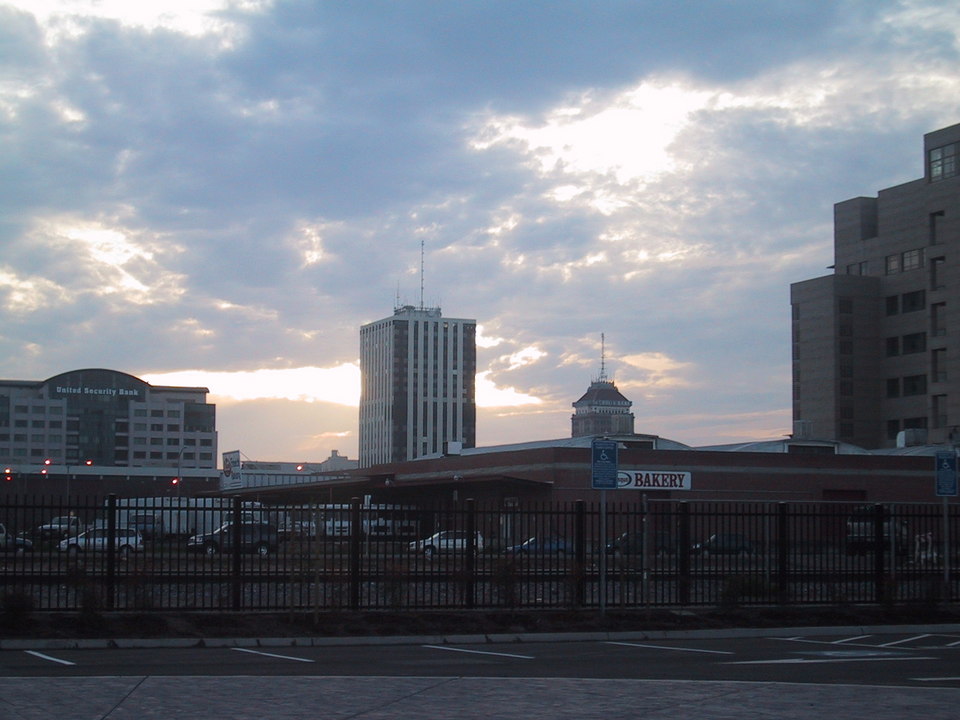
Downtown Fresno:
 Farming:
 2. Transients in Paradise by Aimee Liu
Aimee Liu currently lives in LA and teaches creative writing at Goddard College's Port Townsend MFA program. In this story, she describes the city of Beverly Hills. She doesn't paint it in the most flattering light, and says that many of it's inhabitants live in transience, no matter how long or how short of time they have lived there.
Biography: http://www.aimeeliu.net/bio.htm
Beverly Hills
My impression of Beverly Hills is that there is probably more to it than meets the eye. On the surface it seems very plastic and fake, but I think that underneath there is something deeper.
Wikipedia: http://en.wikipedia.org/wiki/Beverly_Hills,_California
Main website: http://www.beverlyhills.org/
A typical street:
 Downtown:

A Beverly Hills Mansion:
3. Showing Off the Owens by T. Jefferson Parker
T. Jefferson Parker lives in Southern California and writes about his love for fly-fishing on the Lower Owens River. To me, it looks like an absolutely beautiful place! I'm not into fishing at all, but I'm sure that anyone who enjoys the sport would love this part of the river.
Biography: http://www.tjeffersonparker.com/biography.htm
Lower Owens River
Fly-fishing on the Owens:
http://www.troutsource.com/RiversFolder/Owens.htm
http://fishingnetwork.net/nocal/owens1.htm
Owens - Wikipedia: http://en.wikipedia.org/wiki/Owens_River
Pictures of the River:

4. The Distant Cataract About Which We Do Not Speak by Mary Mackey
Mary Mackey is currently a professor at California State University, Sacramento. In this story, she writes about one of her favorite portions of the American River, where she loves to spend her free time. To her, it can be like a vacation, but it is actually only minutes away from civilization. I have been to the American River and think that it is beautiful, and I would love to find the area she writes about. She mentions a lot of culture and interesting experiences she's had, and I would love to see that as well.
Biography: http://www.marymackey.com/Pages/bio.html
American River Parkway
Environmental stewardship: http://www.arpf.org/
Photos: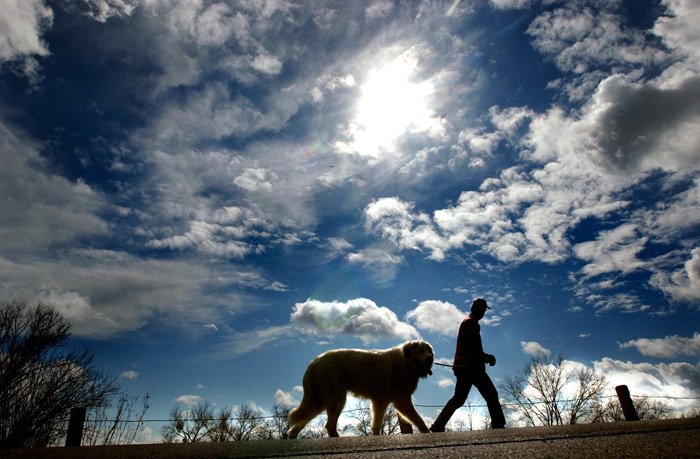


Classmate Responses
1. Andrea - “Humes talks about leaving his car and walking to town to the not-Starbucks coffee shop and to the Gap-less and Banana Republic free Main street. He talks about all the tourists who just want to go to the hotspots and have a good time that they may be missing the best by not visiting this town of Seal Beach."
I want to go there! I love the simplicity of small towns that have been untouched by large franchises.
2. Brian - "I did not know that Iraq had freeways that were similar to ours."
Same here...to be honest I've always thought that Iraq would be mostly deserts with poorly paved roads, because that's mostly what we see on TV.
3. Chris - "She is describing the lead guitarist who came up with their name “El Rancho Motel.” “‘That’s it!’ cried Reverend Big Chris, our lead guitarist, a rugby player who’d earned his nickname by accepting ordination in lieu of cash at a recent church gig…”"
Oh my goodness...that is hilarious. A biker bar sounds like a pretty crazy place to visit.
4. Daniel - "My favorite part was near the end, when he brought up the myths of California, the Sasquatch, and the Dark Watchers. It makes me think of stuff you hear about on television, or in science fiction, or from crazy neighbors you might have growing up."
My brothers and dad are about to leave on a backpacking trip and keep joking about how they'll see Big Foot. Even if it is a myth, it's still fun to laugh about the dangers of possible encounters with Sasquatch.
5. Hilary - "This story made me think of how Santa Rosa has become more and more industrialized. I have grown up here and seen the changes that have taken place. My grandpas house was once surrounded by open land out in the country. Now you can see your neighbors houses and hear peoples conversations. Our open land is diminishing soon it will be gone. It makes me terribly sad."
It makes me sad, too. My house used to be the city limits, but how it's surrounded by new housing. So much has changed in only a few years!
6. Jason - "This made me imagine the Santa Rosa fair at the fairgrounds. When she speaks of the spinning disc I think of a ride that made you stick to the wall and wouldn’t let you move. It makes me picture the old days when I was younger and didn’t have to worry about chores, the days I could just go hang out with my friends without pressure to do anything else. It reminds me of a day of never ending excitement and new experiences. I see my friends face when we went on “Zipper” and I see a whole summer of my youth."
I love the fair! That ride that makes you stick to the wall just about made me black out, but Zipper is amazing! It would be nice to be able to go enjoy it without worrying about the responsibilities that come with being an adult.
7. Mark - "For example many individuals from Northern California and outsiders view southernCalifornia California
That's really true. If you go back east and mention that you're from California, some people smirk at you! The worst was when I was on a trip to D.C. on the day that Arnold was elected as governor. A lot of people think California is a joke, but it's not.
8. Marylou - "Business of the day is conducted in shorts and T-shirts: the local congressman can be seen now and then yakking on his cell in his wet suit after surfing."
Classic California right there! It's all about being casual and comfortable.
9. Preston - "whether we plan to leave tomorrow or sink roots here for generations, none of us is less temporary than the girl now squatting in front of Starbucks who resembles anyone's niece, though no one here has ever seen her before."
Sad. So many of us are guilty of selective blindness and are unwilling to help others such as this girl.
10. Terrie - "I did not know that if you cover a piece of cardboard with Vaseline and face it toward the freeway that it will turn black in a few days. Such an eye opener on how cars cause such pollution."
That is disgusting. I didn't know that!
1. The Big Valley by Mark Arax Mark Arax is a writer from Fresno. He described how that city, as well as the surrounding area have changed over time from the industrial and commercial business boom.
Fresno
It is the fifth largest city in California.
It is a huge economic contributor, especially in the Central Valley.
Fresno used to have a lot of older, historic buildings, but many of those are being refinished or torn down.
Overall, the town is very historic and contains a lot of culture. The agricultural industry is thriving there, but it has lost much of its historic feel.
Wikipedia: http://en.wikipedia.org/wiki/Fresno,_California
Main website: http://www.fresno.gov/default.htm
Convention and Visitor's Bureau: http://www.fresnocvb.org/
Downtown Fresno:
Farming:2. Transients in Paradise by Aimee LiuAimee Liu currently lives in LA and teaches creative writing at Goddard College's Port Townsend MFA program. In this story, she describes the city of Beverly Hills. She doesn't paint it in the most flattering light, and says that many of it's inhabitants live in transience, no matter how long or how short of time they have lived there.
Biography: http://www.aimeeliu.net/bio.htm
Beverly Hills
My impression of Beverly Hills is that there is probably more to it than meets the eye. On the surface it seems very plastic and fake, but I think that underneath there is something deeper.
Wikipedia: http://en.wikipedia.org/wiki/Beverly_Hills,_California
Main website: http://www.beverlyhills.org/
A typical street:
Downtown:A Beverly Hills Mansion:
3. Showing Off the Owens by T. Jefferson Parker
T. Jefferson Parker lives in Southern California and writes about his love for fly-fishing on the Lower Owens River. To me, it looks like an absolutely beautiful place! I'm not into fishing at all, but I'm sure that anyone who enjoys the sport would love this part of the river.
Biography: http://www.tjeffersonparker.com/biography.htm
Lower Owens River
Fly-fishing on the Owens:
http://www.troutsource.com/RiversFolder/Owens.htm
http://fishingnetwork.net/nocal/owens1.htm
Owens - Wikipedia: http://en.wikipedia.org/wiki/Owens_River
Pictures of the River:
4. The Distant Cataract About Which We Do Not Speak by Mary Mackey
Mary Mackey is currently a professor at California State University, Sacramento. In this story, she writes about one of her favorite portions of the American River, where she loves to spend her free time. To her, it can be like a vacation, but it is actually only minutes away from civilization. I have been to the American River and think that it is beautiful, and I would love to find the area she writes about. She mentions a lot of culture and interesting experiences she's had, and I would love to see that as well.
Biography: http://www.marymackey.com/Pages/bio.html
American River Parkway
Environmental stewardship: http://www.arpf.org/
Photos:
Classmate Responses
1. Andrea - “Humes talks about leaving his car and walking to town to the not-Starbucks coffee shop and to the Gap-less and Banana Republic free Main street. He talks about all the tourists who just want to go to the hotspots and have a good time that they may be missing the best by not visiting this town of Seal Beach."
I want to go there! I love the simplicity of small towns that have been untouched by large franchises.
2. Brian - "I did not know that Iraq had freeways that were similar to ours."
Same here...to be honest I've always thought that Iraq would be mostly deserts with poorly paved roads, because that's mostly what we see on TV.
3. Chris - "She is describing the lead guitarist who came up with their name “El Rancho Motel.” “‘That’s it!’ cried Reverend Big Chris, our lead guitarist, a rugby player who’d earned his nickname by accepting ordination in lieu of cash at a recent church gig…”"
Oh my goodness...that is hilarious. A biker bar sounds like a pretty crazy place to visit.
4. Daniel - "My favorite part was near the end, when he brought up the myths of California, the Sasquatch, and the Dark Watchers. It makes me think of stuff you hear about on television, or in science fiction, or from crazy neighbors you might have growing up."
My brothers and dad are about to leave on a backpacking trip and keep joking about how they'll see Big Foot. Even if it is a myth, it's still fun to laugh about the dangers of possible encounters with Sasquatch.
5. Hilary - "This story made me think of how Santa Rosa has become more and more industrialized. I have grown up here and seen the changes that have taken place. My grandpas house was once surrounded by open land out in the country. Now you can see your neighbors houses and hear peoples conversations. Our open land is diminishing soon it will be gone. It makes me terribly sad."
It makes me sad, too. My house used to be the city limits, but how it's surrounded by new housing. So much has changed in only a few years!
6. Jason - "This made me imagine the Santa Rosa fair at the fairgrounds. When she speaks of the spinning disc I think of a ride that made you stick to the wall and wouldn’t let you move. It makes me picture the old days when I was younger and didn’t have to worry about chores, the days I could just go hang out with my friends without pressure to do anything else. It reminds me of a day of never ending excitement and new experiences. I see my friends face when we went on “Zipper” and I see a whole summer of my youth."
I love the fair! That ride that makes you stick to the wall just about made me black out, but Zipper is amazing! It would be nice to be able to go enjoy it without worrying about the responsibilities that come with being an adult.
7. Mark - "For example many individuals from Northern California and outsiders view southern
That's really true. If you go back east and mention that you're from California, some people smirk at you! The worst was when I was on a trip to D.C. on the day that Arnold was elected as governor. A lot of people think California is a joke, but it's not.
8. Marylou - "Business of the day is conducted in shorts and T-shirts: the local congressman can be seen now and then yakking on his cell in his wet suit after surfing."
Classic California right there! It's all about being casual and comfortable.
9. Preston - "whether we plan to leave tomorrow or sink roots here for generations, none of us is less temporary than the girl now squatting in front of Starbucks who resembles anyone's niece, though no one here has ever seen her before."
Sad. So many of us are guilty of selective blindness and are unwilling to help others such as this girl.
10. Terrie - "I did not know that if you cover a piece of cardboard with Vaseline and face it toward the freeway that it will turn black in a few days. Such an eye opener on how cars cause such pollution."
That is disgusting. I didn't know that!
Sunday, July 12, 2009
Week 4 due 7/9 Group #1
1. Story title and author name: The Big Valley - Mark Arax
2. Summary: The author describes how the landscape around his home in Fresno has been changed over the years. The area was once full of orchards and vineyards, but the industrial world has taken over during his lifetime. The story details some of the cosmetic effects of industrialization and globalization on the farming market. Where there were once multiple fig orchards, there are now Wal-marts and McDonald's. Many farmers in the area are struggling to continue their work, and more and more farms disappear because of the changing markets. The author is a "backyard farmer with too little land for [his] dreams."
3. Favorite quote: "If you're queasy about Mad Cow, this isn't the place for lunch. Even the shish kebab barbecued by the Armenians is beef." (Page 23)
4. What it made me think of: The story made me think of how the landscape in Santa Rosa has changed since we moved into our house. When my parents bought our home twenty years ago, we were on the outskirts of town. There were cows over our fence that would periodically attempt to get to our grass by knocking over portions of the wooden barrier that covered the property lines. However, the cows and farmland next door soon disappeared, giving way to new housing developments and commercial businesses. Now, the cows are only thought of when the summer heat hits the manure a few miles away.
My dad and I are the farmers in the family. Like the author, we had our own backyard crop and were passionate about our mini-vineyard, orchard, and planter boxes. Although we don't live next door to farmland anymore, I dream of the day I can grow a legitimate crop of wheat or and care for animals larger than rabbits. I get to follow my dream at the end of this summer, when I will spend a few weeks on a dairy farm in North Dakota!
5. What did I learn: Since I haven't spent time in that area of California, I found it interesting to read about the changes and development in Fresno and the other places the author wrote about. Since farming is close to my heart, I was already aware of the struggles of farmers who aren't connected with major industries. I enjoyed reading some of the history behind some of the small towns around Fresno and about what they grow (figs, vineyards, ect.).
1. Story title and author name: Transients in Paradise - Aimee Liu
2. Summary: This story was about Beverly Hills and its inhabitants. The author states that all the people of that city live in transience, no matter how long they have been there. There is no real permanence. You may be up and coming one minute, and then homeless the next. The author describes Beverly Hills as a place that is all about fulfilling desires. However, along with the desire comes fear. Everything may be picture-perfect and plastic on the outside, but underneath all the glamor and makeup is a whole lot of fear and pain.
3. Favorite quote: "And there you have the essential current between desire and fear. Desire is merely the version that says, I want and am taking mine - and better me or us than them or you. While the inverse, better him or her or them than us, is simple code for fear." (Page 33)
4. What it made me think of: A few years ago, I had the opportunity to go to Juarez, Mexico, to work in a clinic with my dad, who is a dentist. A celebrity dentist from ABC's Extreme Makeover came with us, and I got quite a taste of his Beverly Hills-like lifestyle. He even had two bodyguards with him! I so appreciated that this man was willing to donate his time and resources to work with us in Mexico - he did a wonderful job. However, it made me sad to see that even with his wealth and successful business, his life was very empty. This story reminded me of him. He had been through a divorce, but was engaged to marry a top reality show contestant (this marriage ended in divorce after less than one year). He didn't adjust easily to the lack of luxury in Juarez, and would get irritated when his desires weren't met. From hearing some of his business calls, it was also apparent that he was fearful that his success would be lost. He, like the people in the story, lived with a mix of desire and fear. His life would probably look perfect to many from the outside, but in reality, his life was not a happy one.
5. What did I learn: I have never been to Beverly Hills, so I thought it was interesting to hear an insider's perspective on that city. I think the idea that the people of Beverly Hills live in a constant state of desire/fear makes a lot of sense, but I think this applies to most people in other cities as well. Even if it's not as extreme as Beverly Hills, most of us could admit saying "better me than them" or "better them than me." This reading also challenged me to not be someone who becomes selectively blind when walking by a homeless person. Where is our compassion? We have so much to offer those who are in need, even if it is just a word of encouragement.
1. Story title and author name: Showing Off the Owens - T. Jefferson Parker
2. Summary: The story is all about fly-fishing. The author details a fly-fishing trip that he took with his friend Brian, and conveys their enjoyment of the sport. The author also talks about how he practices fly-fishing - by catching lizards without hooks. For him, the sport is an addiction, and he can't get enough of it.
3. Favorite quote: "My case of fly-fishing is in an early stage but I have no hope for a cure. Not to bludgeon the comparison but, like rabies again, the only cure for fly-fishing, once it has reached a certain point, is death." (Page 39)
4. What it made me think of: This story reminds me of a day I spent fishing when I was about 10 years old. It was, in fact, the only time I've been fishing. I enjoyed learning how to do it, but as soon as I got a bite on the line, I freaked out. I was traumatized when my dad made me hold the fish so that he could get a picture. I don't know why, but fish gross me out. Therefore, putting my hands in this fish's mouth was not a pleasant experience for me. I was almost in tears by the time my dad snapped the picture, and ended up throwing the fish on the ground as soon as the photo-op was over. My dad, already upset with my lack of composure, gave me a lecture about releasing the fish gently, not chucking it on the ground. He wasn't happy, but the fish made it back into the lake alive. It is because of this childhood experience, that I have never been fly-fishing and have absolutely no desire to do so.
5. What did I learn: I learned about fly-fishing trips and some of what one would do on such a trip.
1. Story title and author name: The Distant Cataract About Which We Do Not Speak - Mary Mackey
2. Summary: The author begins the story by describing her hobby of duck-watching, and describes various encounters she has had with other animals on the American River. She and her husband love to go to an island on the river. Although it is only minutes away from civilization, their getaway on the river seems secluded. Many cultural gatherings and religious activities take place on the island, and she describes some of what she has seen there.
3. Favorite quote: "Suddenly, a female with six tiny ducklings trailing behind her paddles toward me, freezes and does a double take. That THING is definitely not a duck! She gives a terrified squawk and my cover is blown. Instantly, all hell breaks loose. Quacking in panic, the ducks scatter like swimmers who have just realized that the log floating toward them is actually a crocodile. Most of the flock takes to the air; the mothers lead their ducklings into the reeds and disappear." (Page 46)
4. What it made me think of: This story made me think of the various places I like to go to find serenity - away from my hectic, overscheduled life. Sometimes, I like to ride my bike through the country or drive out to the beach. I bring my notebook, Bible, or book out with me and escape for an hour or so from civilization. Although I may only be a few miles away from busy freeways and businesses, it can seem like I am all by myself. I think it is important for us to be able to know locations where we can find peace, whether it be the beach, mountains, rivers, or even the backyard.
5. What did I learn: I learned about what sounds like a wonderful island on the American River in Sacramento. I would love to see this place for myself, maybe spend a few hours out there. I have rafted down a portion of the river before, and it is beautiful. I learned about some of the wildlife (i.e. ducks, coyotes, snakes, and beavers) that can be found on the river, as well as the cultural/spiritual gatherings (i.e. baptisms, prayers, offerings, picnics) that take place there.
What similarities and differences do you see between the authors and the topics they chose to discuss? All the authors chose to write about various locations that they appreciate or where they live. Besides the fact that all the stories were about places in California, I didn't see many similarities. One author wrote about changes taking place where he resides, another critiqued Beverly Hills, another wrote about fly-fishing, and the last author wrote about duck-watching and a getaway she enjoys. The authors' writings all varied, as did their writing styles. I enjoyed each of the stories, as well as the different perspectives and thoughts each author brought.
Review the work of 10 classmates. What is one thing you want to share from each?
1. Aloma - "The borders I saw with this storyline dealt with emotional borders. How many people could love and wait for this person for over fifty plus years? Even after all this time, how could the borders of love and emotion still remain true and present?" True...I can't even imagine waiting that long for someone. Well said.
2. ChanDavid - "Which is better, to have loved and lost, or rather, than to never loved at all?" Good question. I think it would be more painful to love and lose, but at the same time there is nothing more beautiful than love. Love hurts, but is SO worth it.
3. Chris - "Freire is a critical thinker, and a man who sees far beyond the socio-economic status of someone. I believe that he would find the idea that Fermina’s father presents (that of only dating within one’s socio-economic status) to be absurd." I didn't think of this aspect. I agree - Freire would think that the idea of love being confined to social status would be ridiculous.
4. Hilary - "True love is worth working and dying for [...]" YES! So true, but how many people are actually willing to put time and effort into loving others, even their spouses?
5. Kimmie - "In addition both men did not sway when they were scrutinized for their devotions; however they remained firm in what they believed in and disregarded the negative influences." How many of us are able to stand up against negative influences and stand firm in our beliefs under pressure?
6. Lemlem - "Dialogue is the first thing that jumps into mind when I think about Freire and this movie. Dialogue in terms of the heart and the social relationship that engaged us in the book and the movie." The film and confirms Freire's beliefs regarding the importance of dialogue.
7. Mark - "They did not know very much about each other despite being married." I agree. You could tell that she was subconsciously questioning her decision to leave Ariza behind, since her marriage was often emotionally shallow.
8. Nicole - "If Fermina and Florentino had used dialogue to express their feelings they may have had clearer views of what they truly wanted earlier on in their lives." Dialogue could have solved a lot of problems for them. Lack of communication caused a lot of pain in the film.
9. Terrie - "Love knows no boundries." Love always hopes and perseveres.
10. Vanessa - "It shows that there is a very thin line between love and obsession [...]" I felt like Ariza's love was more infatuation then true, genuine love.
Sunday, July 5, 2009
Week 3 - Love in the Time of Cholera
I rented the film version of the story and thought it was an extremely well-made movie with a powerful storyline. Although there were aspects of the film that I did not appreciate (the amount of sexual content, for example), I did enjoy the movie.
The film begins with a foreshadowing of the death of Urbino and a confrontation between Ariza and Fermina. Ariza declares his life-long passionate love for Fermina, and Fermina responds with outrage at his insensitivity.
The story then returns to a time where the main characters are at a far younger age. Ariza, a telegram carrier, falls madly in love with Fermina, who comes from a far more privileged and wealthy class. When Ariza asks Fermina to marry him, she originally accepts his proposal, but her father quickly ends the engagement and sends his daughter away. Fermina's father cannot seem to comprehend how his daughter could fall for a man of Ariza's class. Fermina later decides that their love was an illusion and that it wasn't true.
Some time later, Fermina becomes ill. Fearing that her sickness is the deadly cholera, her father sends for a docter. The doctor, Urbino, is an expert regarding the symptoms and treatment of cholera - committed to ending the reign of the deadly disease. He is a progressive man who has a high status in society. Urbino finds that Fermina has not contracted the dreaded sickness, but thinks that Fermina is extremely beautiful. He eventually proposes to her, but does not really love her. He believes that they will grow into love - that they can 'will' love into existence.
Meanwhile, Ariza is absolutely heartbroken. When Fermina is taken away, he vows that he will not love anyone else and that he will only give his virginity to Fermina. Even after discovering that Fermina is married and expecting a child, he holds to his promise. His sickness, love, is comparable to the disease of cholera in the film. Ariza manages to keep his vow for virginity for quite some time, but loses his chastity when a woman pulls him into her room. From that point on, Ariza decides that sex is a way to ease the pain of not being with his true love. At one point in the film, he says that he has been with over 600 women. However, although he gives himself physically, he does not give his heart to any of these women.
It is apparent that Fermina and Urbino's marriage, although not unbearable, is not a happy one. She often thinks about how life would have been different if she had married Ariza. Fermina and Urbino are prominent in society, but their high status does not bring them complete fulfillment. True love is missing from their relationship.
Urbino dies in an accident, and Ariza comes to the funeral decreeing his passionate love for Fermina. Although she refuses him, Ariza persists and their romance is eventually rekindled. They make love for the first time on a riverboat, and Ariza says that he saved his (spiritual) virginity for her. Although he has been with hundreds of women, not one of them has satisfied the love in his heart. Fermina fears a scandal, so Ariza tells the captain to raise the cholera flag - so that that no one will board the ship. They will be able to make love forever, no longer listening to the comments of those who cannot see beyond class and circumstances.
The ideas of Paulo Freire can be well integrated with this love story. Specifically, I think that his theories regarding human nature and society are best fit. In Love in the Time of Cholera, the differences between upper, middle, and lower classes are prevalent throughout the entire story. Freire longed for a world that transcended the boundaries of class, where all are equal and have the same opportunities. He wanted to put an end to oppression and fought for the privileges of all. It was Freire's belief that the same opportunities should be given to all people, no matter what class, culture, race, or ethnicity they belonged to.
I can also see similarities between Freire and the character of Ariza. Like Ariza, Freire never gave up what he was passionate about. Ariza was so infatuated with Fermina that he was blinded to loving any other woman. He never gave up on his love for her. Freire, no matter what obstacles were placed in his path, was able to conquer barriers and fight for the education of humanity. He never gave up his passion for education and the eradication of oppression, even through exile and mistreatment.
Love in the Time of Cholera is a human story that transcends borders in that it shows how love knows no limits. You cannot put boundaries around love. Ariza's love for Fermina was so deep and passionate that physical relationships with hundreds of other women could not extinguish his desire. Their love went beyond the borders of social and cultural class, and prevailed through the disease and war of that time.
Classmate Reviews
1. Aloma - "[Freire] would have to learn their perspective before true comprehension could occur." This is so true for all of us in our lives. Before we can truly relate to someone, we need to be able empathize with what they are going through. Freire was successful in this.
2. Brian - "Freire wants us to think in terms of teacher-student and student-teacher, that is, a teacher who learns and a learner who teaches – as the basic roles of classroom participation." I think this is so important. I know that when I teach, if I teach with humility, I can learn just as much from my students as they can learn from me.
3. ChanDavid - "He highlighted educated change in the world through dialogue. That dialogue was a mutual activity requiring reciprocal respect from all participants." Freire's thoughts on dialogue are very similar to what Obama spoke on in the speech we watched.
4. Chris - "if we don’t give all people a chance to succeed with an education, we’re selling ourselves short as a species." This is so true. Think of where our world could be if we enabled and allowed every individual the chance to be educated!
5. Hilary - "One of Freire's earlier accomplishments was teaching 300 illiterate sugarcane workers to read and write in just 45 days." Truly incredible. These workers were all very busy in the fields, and Freire was able to teach them. It is remarkable how these students were able to learn even though they must have been exhausted from their work each day.
6. Jason - "Culture circles are groups of people who are learning the language with a couple of people fluent in that language." I think that would be a really neat way to learn a language.
7. Kimmie - "Although Freire’s work is somewhat controversial to various people, and he was scrutinized throughout his life for his beliefs." I think that most innovative ideas will have critics. I also think that many people, myself included, give into fear when it comes to sharing what we really believe. I love that Freire wasn't afraid to say what was on his mind!
8. Marissa - "I feel like he is very wholesome and down to earth which strikes me and makes me want to listen and learn more from him." I thought this too. I appreciated Freire's simplicity - he didn't seem to think he was highly important, and he wasn't prideful.
9. Marylou - "He spoke against the “banking” concept of learning. This concept viewed a student as an empty account to be filled by the teacher; the teacher telling the student how to think." I appreciated Freire's views on this topic. I have always hated feeling like some teachers are just trying to shove information into my head!
10. Nicholas - "This would flip the participation from teacher to student on to student and teacher but none being mutually exclusive from the class." Very well said. There is a balance to be found in the student-teacher relationship. Both can learn and both can teach, but it is easy for lines to be crossed.
Subscribe to:
Posts (Atom)
